Binance's $6.3 Billion Security Breach: What Happened and What Every Business Can Learn
Update note: This is a developing story. Everything below is accurate as of October 30, 2026, based on the reports listed at the end. Figures are estimates and may change as Binance publishes its promised technical post-mortem.
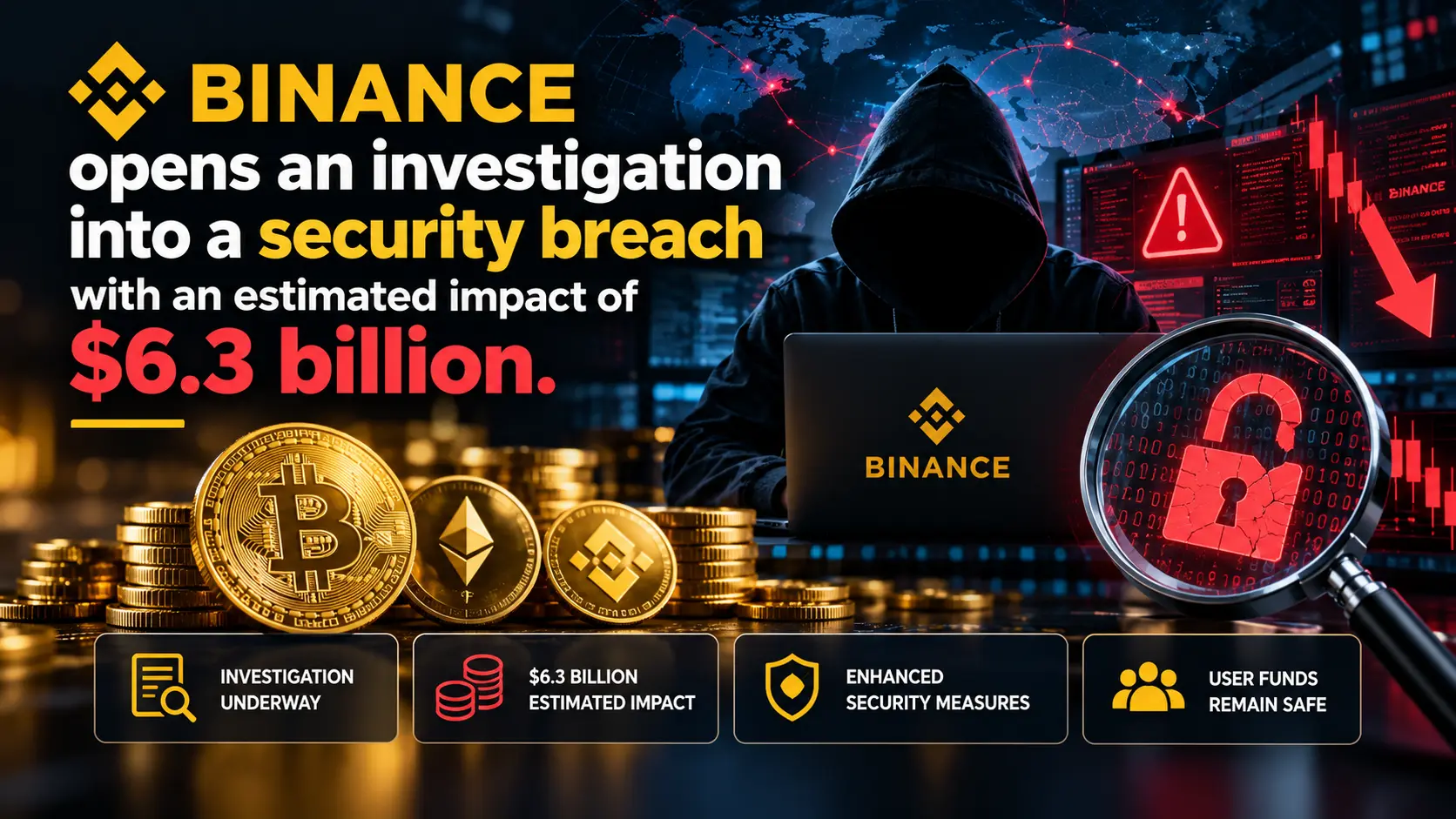
Quick answer: On October 29, 2026, Binance, the world's largest crypto exchange by volume, said it was investigating a security incident involving unauthorized withdrawals, with an estimated impact of about $6.3 billion. Binance says user funds are safe and that it will cover all losses. About $3 billion has reportedly been frozen. Its early finding points to a compromised laptop belonging to a DevOps engineer, which is a lesson in basic security that applies to businesses of every size.
What happened?
Late on Thursday, October 29, Binance announced it was dealing with a major security incident. According to ABC News, the company described it as a "complex attack" and said it is working with law enforcement. It also paused deposits and withdrawals as a precaution while security checks continue.
Binance's own estimate of the financial impact is about $6.3 billion. Independent blockchain analysts have given slightly different figures. Chainalysis, for example, put the theft at roughly $5.9 billion, according to CoinDesk. If the numbers hold, it would be the largest crypto theft on record, well above the roughly $1.5 billion Bybit hack in February 2025.
How did the attack reportedly work?
Binance's preliminary finding is that the attacker got in through the laptop of a DevOps engineer. From there, they reached a service container that was used to submit unauthorized withdrawals. Binance says it has found no evidence of a wallet private key leak. Later reports say further breach points were involved, but Binance has not named them.
Blockchain analysts have described the speed of what followed. TRM Labs said most of the funds left Binance-controlled wallets within about 20 minutes, across 10 blockchains, as reported by Forbes. Other reporting suggests the attacker had prepared well in advance. Researchers also pointed to the way a recent Ethereum feature was used to speed up the draining of one hot wallet. One Ethereum researcher argued that the feature itself was not broken and mainly made the theft quicker.
What nobody outside Binance can say yet is how the attacker gained the ability to sign those withdrawals. That detail is expected in the company's technical post-mortem, which it has promised to publish after it verifies the facts.
What about user funds?
Binance says user funds are safe and that all losses will be covered from its SAFU emergency fund and company reserves. Founder Changpeng Zhao, who has said he no longer manages the exchange, repeated that user funds are safe and said he expects them to be fully covered. Co-CEO Yi He said withdrawals should resume by Sunday.
CoinDesk reported that Binance held roughly $144 billion in assets before the incident, so the stolen amount is about 4% of holdings. Analysts at Fundstrat told reporters it does not currently look like a solvency event. Those are Binance's statements and outside opinions, not an audit. The company says it will publish an updated Proof of Reserves after remediation.
Reports differ on how large the SAFU fund is, so treat any single figure with caution.
How much has been frozen?
Binance says about $3 billion has been frozen on-chain. Tether and Circle, which issue the USDT and USDC stablecoins, can block transfers from specific addresses, and both acted quickly. The exact amounts vary between reports, so we will not quote a precise split.
The harder part is everything that is not a stablecoin. Elliptic estimated that around 44% of the stolen assets had been frozen, almost all of it stablecoins, leaving more than $3 billion under the attacker's control. CoinDesk notes that bitcoin has no issuer who can blacklist addresses. About 18,270 BTC was split across 19 wallets within minutes, and the coins can only be stopped if they reach an exchange or another service that cooperates.
Who is behind it?
Several analytics firms point to North Korea. TRM Labs attributed the theft to its TraderTraitor group with high confidence, and Chainalysis called it likely. These are expert assessments, not a legal finding. We have seen no confirmation from law enforcement or from Binance, and North Korea has denied involvement in similar cases in the past. Treat the attribution as probable but unproven.
How did the market react?
Crypto prices fell. Bitcoin dropped to around $77,000 and Ether fell about 4%, with BNB, Binance's own token, down by more than 5% in the Yahoo Finance report. Crypto-related stocks were set to open lower. A separate, much smaller breach at Polymarket, involving a third-party provider, was disclosed the same day. This article is not investment advice.
Seven lessons for every business
You do not need to run a crypto exchange for this to matter. The reported entry point was a laptop, which is exactly the kind of weak spot found in ordinary companies.
- Treat every laptop as part of your security perimeter. Keep operating systems and software updated, use endpoint protection, encrypt disks, and block unknown software where you can.
- Apply least privilege. One engineer's machine should never be able to reach the systems that move money or touch customer data. Give people only the access their role needs, and review it regularly.
- Separate duties and require approvals. Large or unusual actions should need more than one person or system to approve. A single compromised account should not be enough.
- Use phishing-resistant multi-factor authentication. Hardware security keys or passkeys are stronger than text-message codes, especially for admin and developer accounts.
- Watch for strange behaviour. Alerts for unusual withdrawals, new devices, odd login times and sudden large transfers can shrink the damage window from hours to minutes.
- Segment your systems. Production servers, build tools, staff laptops and customer data should not all sit on one flat network.
- Practise your incident response. Know who makes the call to pause services, who talks to customers, and how you will rotate secrets. Binance's quick suspension and freezes appear to have limited the loss, and that is only possible with a plan.
Most small businesses will never be targeted by a state-backed team. But the same basics stop the far more common attacks on small websites and online stores: stolen passwords, out-of-date software and over-powered accounts.
What should crypto users do now?
If you hold assets on Binance, follow its official channels for updates and be wary of messages claiming to offer help or recovery. Scammers tend to move quickly after big incidents. Do not click links in unexpected emails, direct messages or social posts, and never share your seed phrase, password or two-factor codes with anyone. For long-term holdings, think about how much you keep on any one exchange. Consider asking a licensed financial adviser before making decisions.
What we do not know yet
- The full attack path and what the "additional breach points" are
- Whether the attribution to North Korea will be confirmed
- How much of the remaining funds can be recovered
- The exact final loss figure
- When deposits and withdrawals will fully return
Check back here, and read Binance's post-mortem when it appears.
FAQs
How much did Binance lose? Binance estimates about $6.3 billion in impact. Chainalysis estimated about $5.9 billion. About $3 billion has been reported as frozen, so the final loss may be lower.
Are my funds on Binance safe? Binance says user funds are safe and that it will cover all losses. That is the company's statement, and a full post-mortem and updated Proof of Reserves are still to come.
How did the hackers get in? Binance's early finding is a compromised laptop belonging to a DevOps engineer, which led to a service container that submitted unauthorized withdrawals. Binance has not yet explained the whole chain of events.
Was it North Korea? Analytics firms such as TRM Labs and Chainalysis point that way. No official confirmation has been published in the reports we reviewed.
Can the stolen money be recovered? Stablecoins can be frozen by their issuers, and about $3 billion has been. Bitcoin and some other assets are harder to stop and can only be blocked if they reach a cooperating exchange or service.
What can small businesses learn from this? Secure your devices, limit access, require approvals for sensitive actions, use strong multi-factor authentication, monitor for unusual activity and rehearse your response plan.
Want a security review for your website or business systems?
Websigntist provides website security, hosting and maintenance for businesses worldwide. If you would like someone to check your access controls, updates and backups, get in touch.
Sources: ABC News; CoinDesk, potential multi-billion Binance hack; CoinDesk, hacker splits bitcoin into 19 wallets; Forbes; Gizmodo; Yahoo Finance. Figures are as reported by those outlets as of October 30, 2026 and may change. This article is general information, not financial, legal or professional security advice.
Get a fixed, itemised quote for your project

Written by
Muhammad Adnan
Founder & Director, Websigntist
Muhammad Adnan is the founder and director of Websigntist, a digital solution and global IT consulting company. He has 14+ years of experience working with 120+ clients from 10+ countries helping businesses with website design and development, eCommerce, SEO, digital marketing, branding and custom digital solutions. He's all about building practical, reliable and results-driven solutions that help businesses achieve online growth, as reflected by a 98% client satisfaction rate.