How Small Business Websites Actually Get Hacked
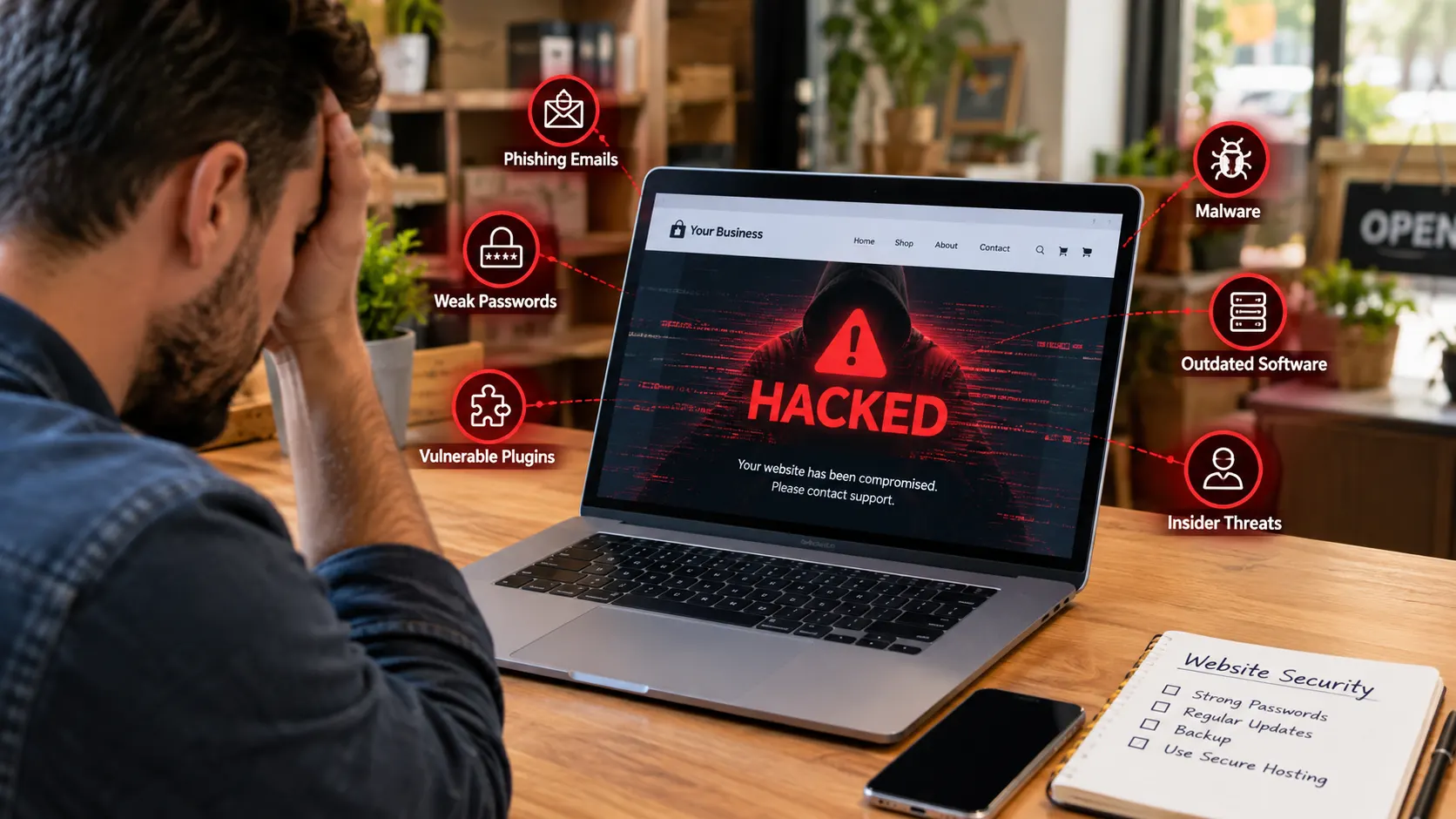
Around 30,000 websites are compromised every single day, and the businesses running most of them never saw it coming, because website hacks rarely look like the dramatic scenes people imagine. Most of the time, it's quiet: a plugin nobody updated, a password reused from another account, an admin login that was never actually secured. Here's what's actually behind most of these break-ins, and what genuinely fixes each one.
Where the Vulnerabilities Actually Live
If your site runs on WordPress, which a large share of small business sites do, the numbers are worth knowing: 91% of known vulnerabilities live in plugins, not in WordPress's own core software. Cross-site scripting accounts for nearly half of all exploited vulnerabilities, and 43% of known vulnerabilities can be exploited without even needing valid login credentials. Once a vulnerability is publicly disclosed, attackers are often exploiting it within about five hours, which is exactly why "I'll update that plugin later this week" is a far riskier habit than it sounds.
The Fixes That Actually Take Five Minutes
Update your plugins and themes immediately when a new version drops, not whenever you get around to it. Most successful attacks target known vulnerabilities that already had a patch available, sometimes for months, before the site got compromised.
Stop using "admin" as your username, and stop reusing a password from anywhere else. This single change closes off a huge share of the automated attacks that simply try common username-password combinations against thousands of sites at once.
Turn on two-factor authentication for every account with admin access. Even if a password does leak somewhere, this one step stops most automated break-in attempts cold.
Delete plugins and themes you're not actually using. An inactive plugin still sitting on your site is still a vulnerability sitting on your site, whether you use it or not.
Set up automatic backups, stored somewhere other than your own server. If something does go wrong despite everything else, this is the difference between losing an afternoon restoring your site and losing years of content permanently.
None of these require a developer or a security budget. They require about twenty minutes total and the discipline to actually do them today instead of after something goes wrong. If you'd rather this be handled for you, that's exactly what our website security service covers.
What a Hack Actually Costs You
The financial cost of a compromised site is rarely the headline number people expect, it's the time and trust that go with it. A hacked site often gets flagged by Google's Safe Browsing system, which shows visitors a red warning page before they can even reach you, and getting that flag removed can take days even after the site is cleaned. Search rankings built up over years can drop sharply while the site is compromised, and don't always fully recover once it's fixed. Customers who land on a defaced page or get redirected somewhere suspicious tend to remember that experience longer than they remember any marketing you did right.
The businesses that get hacked usually aren't the ones with the most valuable data, they're the ones that skipped the basics because nothing bad had happened yet. The five minutes it takes to fix that is genuinely the cheapest insurance most small businesses will ever buy.
Get a fixed, itemised quote for your project

Written by
Muhammad Adnan
Founder & Director, Websigntist
Muhammad Adnan is the founder and director of Websigntist, a digital solution and global IT consulting company. He has 14+ years of experience working with 120+ clients from 10+ countries helping businesses with website design and development, eCommerce, SEO, digital marketing, branding and custom digital solutions. He's all about building practical, reliable and results-driven solutions that help businesses achieve online growth, as reflected by a 98% client satisfaction rate.