Website vs. Social Media: Where Should a New Business Actually Spend Its Marketing Budget First?
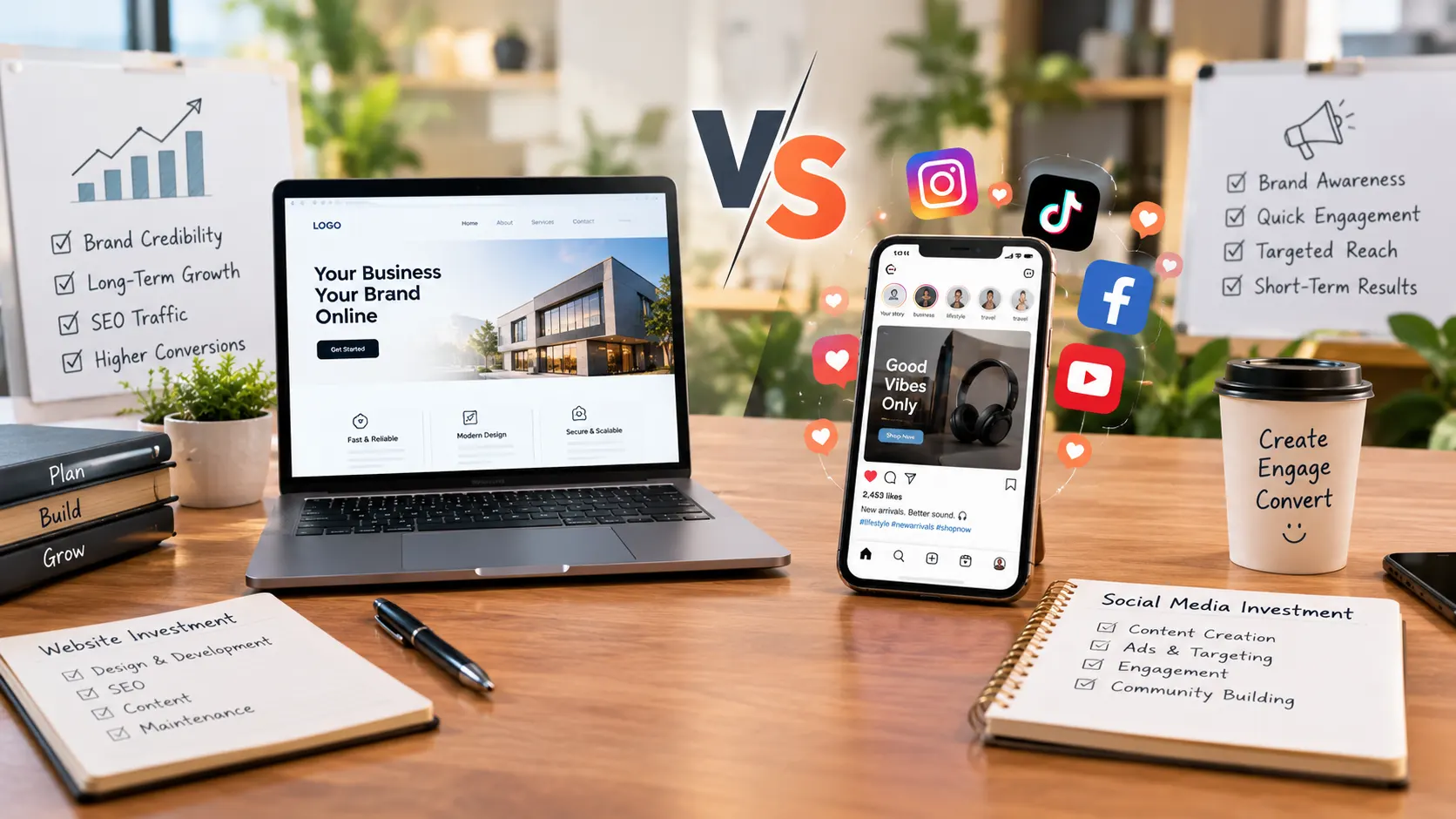
This question comes up constantly from business owners with a few thousand dollars to spend and not much patience for wrong answers: build the website first, or put that same money into social media and ads? Most advice online picks a side. The honest answer is that both sides are half right, and the actual mistake is treating this as a choice between two competitors instead of two tools that do different jobs.
What Social Media Actually Buys You
Speed and feedback. You can post today, get a reaction today, and learn within a week or two whether your messaging, pricing, or product actually resonates with anyone. That kind of fast, cheap feedback loop is genuinely valuable when you don't yet know what's going to work, and it's a big part of why so many new businesses start there instead of with a website.
What a Website Actually Buys You
Ownership and compounding value. Every post on social media is essentially rented space, subject to an algorithm you don't control and a platform that could change its rules tomorrow. A website you own keeps building value the longer it exists, especially once search engines start sending it traffic you're not paying for. It's also usually where a customer goes to actually verify you're legitimate before making a bigger purchase, even if they found you through Instagram first.
The Practical Order That Actually Works
For a genuinely new business with a small budget, the smartest sequence usually isn't "website first" or "social media first," it's "minimum viable version of both, at the same time." A simple one-to-three-page website, professional but not elaborate, paired with consistent activity on the one social platform where your actual customers spend time, covers both jobs without draining a limited budget on either. As revenue starts coming in, that's when it makes sense to invest more seriously in the website, since it's the part of this equation that keeps paying you back long after the spend, while social ad spend stops working the moment you stop paying for it.
The businesses that struggle usually did one of two things: sank their whole budget into an elaborate custom website before they'd validated anything, or built a following on social media for two years with no separate home to send that audience to once they were ready to convert it into something more durable. Neither extreme is the smart play. A modest version of both, done early, almost always is.
What This Looks Like With an Actual Budget
For a business starting with, say, a few thousand dollars, a workable split often looks like a modest, professionally built website taking a meaningful chunk of that upfront, since it's a one-time cost rather than an ongoing one, with the remainder going toward a few months of consistent content and a small amount of paid boosting on the one platform your customers actually use. As real revenue starts coming in, that ratio should shift, with a growing share going toward paid acquisition and content, since the foundational asset, the website, mostly needs maintenance rather than fresh investment at that point. Getting the sequence right matters more than getting the exact percentages right.
Get a fixed, itemised quote for your project

Written by
Muhammad Adnan
Founder & Director, Websigntist
Muhammad Adnan is the founder and director of Websigntist, a digital solution and global IT consulting company. He has 14+ years of experience working with 120+ clients from 10+ countries helping businesses with website design and development, eCommerce, SEO, digital marketing, branding and custom digital solutions. He's all about building practical, reliable and results-driven solutions that help businesses achieve online growth, as reflected by a 98% client satisfaction rate.