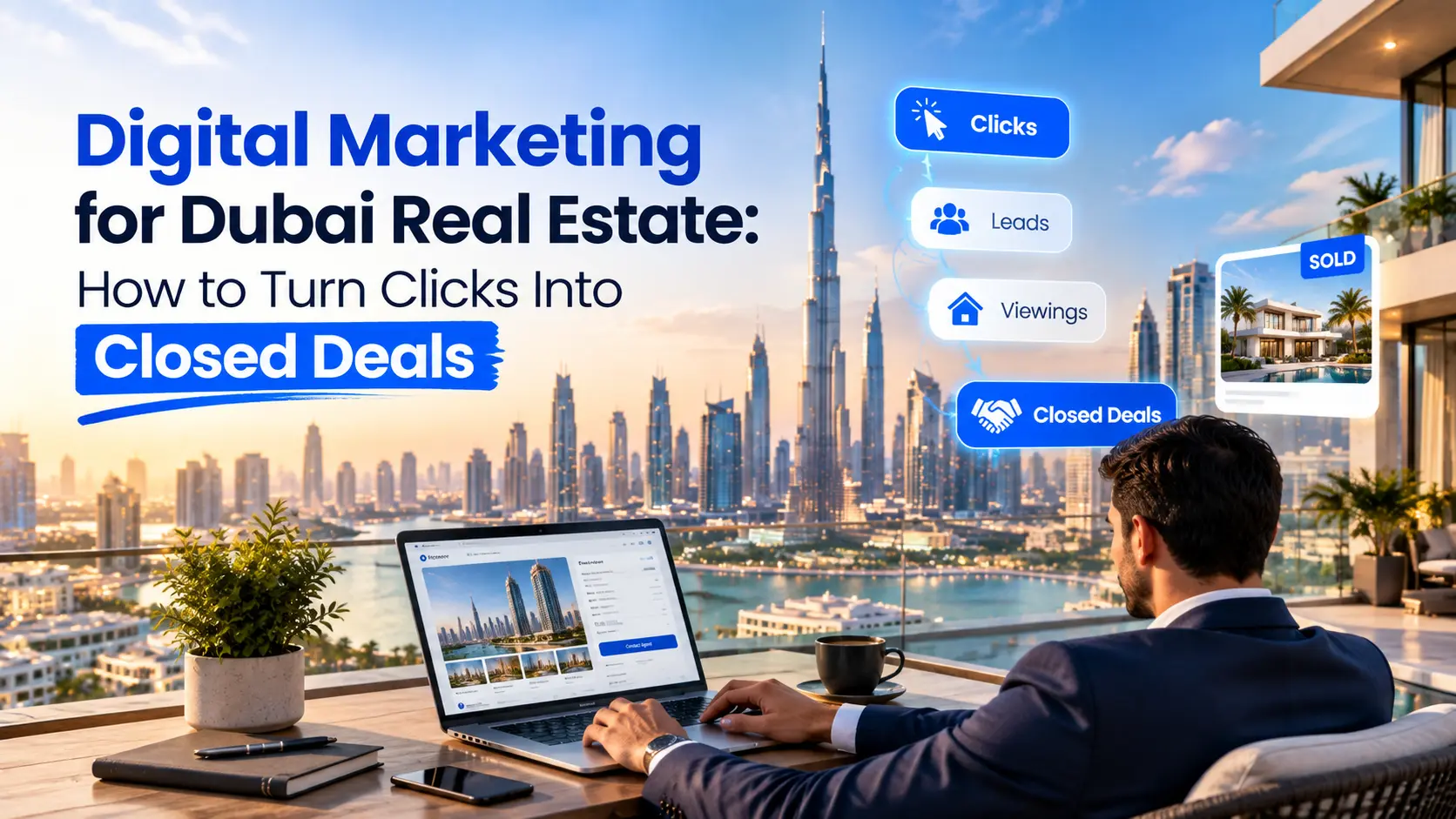
Why Real Estate Is the Fastest-Growing Business in the UAE (And Where the Real Opportunity Actually Is)
Ask ten people in Dubai what business they'd start with a clean slate and a bit of capital, and a surprising number won't say tech, hospitality, or trading. They'll say real estate. Not because it's trendy, but because the numbers keep making the case louder than anyone needs to argue it. The UAE economy grew 3% in Q1 2026 to reach AED 485 billion, with non-oil activity now accounting for 79.4% of that output, according to figures reported by Emirates 24|7, and the Central Bank is projecting 5.6% growth for the year on the back of that same non-oil diversification. Property sits right at the center of it.
Real estate isn't just riding the UAE's growth story anymore — in a lot of ways, it's writing it. So the more useful question isn't "is real estate booming?" Everyone already knows that. The useful question is: why is it growing faster than almost every other business category here, and where specifically does that leave room for someone building a business today, rather than someone who already bought a tower in 2015?
The Numbers Behind the Claim
Dubai closed 2025 with a record AED 682.5 billion in property sales, and instead of cooling off, the market opened 2026 even stronger — AED 252 billion in transactions in Q1 alone, a 31% jump from the same period the year before, per the Dubai Land Department. That's not a market that peaked and is coasting. That's a market still accelerating, three consecutive years in.
What makes it "the fastest-growing business" rather than just a healthy sector is what's happening underneath those headline numbers: it isn't only property owners and developers benefiting. It's brokerages, property management firms, interior fit-out companies, short-term rental operators, mortgage advisors, and a fast-growing layer of proptech startups building software for all of the above. When a sector grows the way this one has, it doesn't create one type of business opportunity. It creates a dozen, at every price point of entry.
What's Actually Driving the Growth
Population growth that outpaces most global cities. Dubai's population keeps climbing as professionals relocate from Europe, South Asia, Africa, and the rest of the GCC, and every one of them needs somewhere to live. That's structural demand, not speculative demand.
A buyer base that's genuinely global. Indian, British, and Egyptian nationals currently top the list of foreign investors in Dubai property, based on recent Khaleej Times reporting, with strong activity from Pakistan, China, Russia, and across the Gulf as well. A market that draws capital from that many directions at once tends to keep growing even when any single source market slows down.
Policy that was built to attract this exact kind of money. Freehold ownership zones, the Golden Visa tied to property investment thresholds, zero personal income tax, and a straightforward business setup process have made the UAE one of the easiest places in the world for a foreign national to both own property and start a company around it. That combination — own it, live here because of it, build a business on top of it — is genuinely rare globally.
Tourism and short-term demand stacking on top of long-term demand. Dubai's hospitality numbers keep climbing year over year, and a meaningful share of that demand flows straight into the holiday-home and short-term rental market, which is itself becoming a serious business category rather than a side hustle.
Off-plan supply meeting real, not speculative, absorption. A common worry from the outside is that so much new supply must eventually outpace demand. So far, absorption has kept pace, largely because so much of the buying is coming from end-users and long-term investors rather than pure flippers.
The Niches Where New Entrants Are Actually Winning
This is the part most "Dubai real estate is booming" articles skip, and it's the part that matters if you're deciding where to put your own time or capital rather than just admiring the headline numbers.
Property management for the buy-to-let and off-plan boom. Every unit sold to an overseas investor who has no intention of living in it needs someone to manage it, rent it, maintain it, and report back. That's an entire business category growing in lockstep with sales volume, largely unnoticed because it's less glamorous than brokerage.
Holiday-home and short-term rental operations. Managing a portfolio of units on platforms like Airbnb and Booking.com, handling guest turnover, cleaning, and pricing, has become a legitimate mid-size business model in Dubai, not a side gig.
Boutique brokerages with a specific niche. The biggest brokerages dominate broad search terms, but boutique agencies focused on one nationality, one price bracket, or one specific community consistently outperform on conversion because they understand that buyer better than a generalist ever will.
Interior fit-out and furnishing for off-plan handovers. As units get handed over, owners overwhelmingly want a "key ready" service — fit-out, furniture packages, styling — rather than an empty shell. This has quietly become one of the most reliable service businesses tied to the property cycle.
Proptech and real estate software. CRM tools built specifically for the UAE market, listing and lead-management platforms, and virtual tour and visualization services are all growing because every brokerage and developer in this market needs them and few want to build in-house.
Mortgage and financing advisory. As more end-users (rather than pure cash investors) enter the market, demand for mortgage brokers who understand both UAE bank requirements and the needs of non-resident buyers has grown right alongside sales volume.
What to Weigh Before Jumping In
None of this means every entry point is easy or every year will look like this one. Off-plan-heavy markets carry handover and delivery risk. Areas can oversupply faster than others. Competition among brokerages has intensified enough that differentiation, not just licensing, decides who survives. And because so much of this market's growth is tied to global capital flows, interest rate shifts and source-market economic conditions abroad genuinely matter here in a way they wouldn't in a purely domestic market. The businesses succeeding right now are the specific, well-run ones, not the ones that entered simply because the sector was growing.
Frequently Asked Questions
Why is real estate considered the UAE's fastest-growing business sector? Because its growth is outpacing broader non-oil GDP growth while simultaneously creating demand across multiple connected industries at once, brokerage, property management, fit-out, financing, and proptech among them, rather than growth confined to one type of company.
Do you need to be a UAE resident to start a real estate business here? No. Foreign nationals can set up real estate-related businesses in the UAE, including in free zones, and many entrepreneurs run these businesses while holding a Golden Visa obtained through property investment itself.
Is it too late to enter the Dubai real estate market as a new business? The core sales and brokerage space is more competitive than it was five years ago, but adjacent categories, property management, short-term rental operations, fit-out services, and proptech, are still growing quickly with far less saturation.
What's the biggest risk in this market right now? Overexposure to a single niche or single source market. Businesses that diversify across service types or buyer nationalities tend to weather slowdowns in any one segment far better than those that don't.
Get a fixed, itemised quote for your project

Written by
Muhammad Adnan
Founder & Director, Websigntist
Muhammad Adnan is the founder and director of Websigntist, a digital solution and global IT consulting company. He has 14+ years of experience working with 120+ clients from 10+ countries helping businesses with website design and development, eCommerce, SEO, digital marketing, branding and custom digital solutions. He's all about building practical, reliable and results-driven solutions that help businesses achieve online growth, as reflected by a 98% client satisfaction rate.